


The star has handed over the entirety of his £25k Mercury Prize winnings to the MVT, which functions to save the UK's grassroots music venues.
The star was given the prize on 16 October as his third album People Watching was chosen as the best record of the last 12 months.
Fender has opted to donate the funds to the MVT, in appreciation of the essential function small stages played in his initial steps.
"As an artist would not have achieved my current career if it weren't for all the shows I did around the North East, and elsewhere, when I was starting out," remarked Fender. "These locations are iconic, but they are in difficulty."
Since the start of 2023, over 150 of these locations have permanently closed – about 16 percent of the entire UK sector.
In the last year, top acts like Pulp, the group Coldplay, Katy Perry and Sheeran have all aided the MVT in its attempts to help venues survive, by including a minor surcharge to their ticket prices, which goes to help independent venues.
He also joined in, generating more than £100,000 on his 2024 arena tour to support thirty-eight local spots across the UK.
The money assisted locations that were dealing with potential shutdown due to issues caused by water damage, fire incidents and personal losses, as well as regulatory hurdles, conflicts and sound issues.
Other venues were granted funding support in modernizing amenities and technical equipment that positively impacted artists and concertgoers.
"The concept that revenue from concerts in big venues supports the independent spots, where it begins for artists like me, is just sensible," Fender has commented.
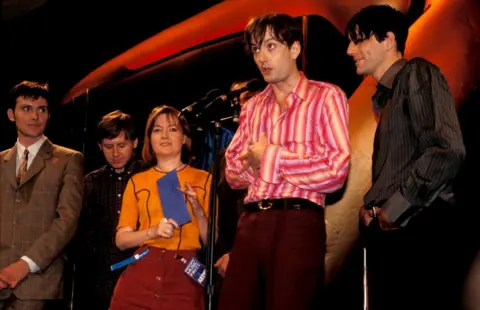
The musician is among several artists to contribute his Mercury Prize prize money to charitable organizations.
When Pulp won the trophy in 1996 for their release their work, lead singer the singer declared that the band would give their cash to the charity War Child.
In 2002, artist Ms Dynamite split her bounty between a few organizations, such as the children's charity and a charity for Sickle Cell.
"And I contributed a £1,000 to the center, to their gymnastics program, because I trained in gymnastics when I was a child and they lacked new equipment," the artist told a publication.
In recent years, Ezra Collective donated their prize money to the community center that developed their group, in addition to other grassroots music organisations.
And 1994 winners the group donated their winnings to a multiple sclerosis charity after a close contact was identified with the condition.
"Receiving the award was sufficient," remarked artist Small. "The money was the extra but we didn't need the cherry, because we had the cake. So our winning affected somebody else's life."
Recently, the trust shared it had protected a couple of small stages in south-east England, by placing them under public stewardship.
One venue in that area and the other in the city were bought under the public acquisition initiative, which is funded by the arts council and music fans who buy "stakes" in the venues.


